
It’s that time of year again! Our annual Employer Branding Profile series is back, bringing you fresh perspectives and honest insights from the people shaping the world of EB.
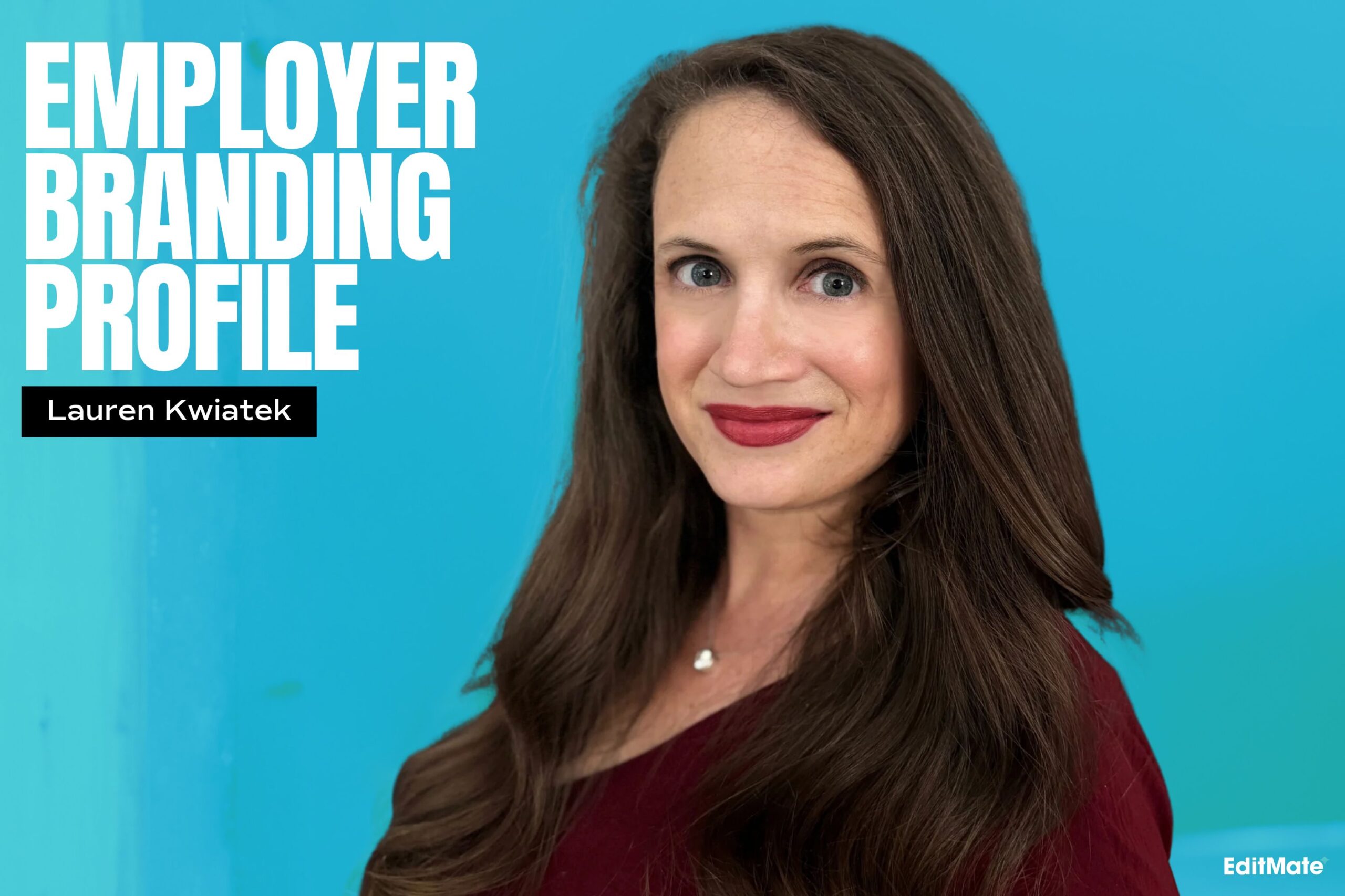
Kicking off this year’s edition is Lauren Kwiatek, Senior Employer Brand Manager, who has plenty to say about why the most impactful work in EB is often the stuff nobody sees.
Lauren is one of those professionals who really gets it and truly understands the bigger picture. With a background spanning design, marketing, strategy, and data, she brings a refreshingly honest take on the challenges, opportunities, and future of the employer branding industry.
In this profile, Lauren shares why the best employer brand work often goes unnoticed, why employee advocacy has to be earned, how to measure whether your employer brand promise actually holds up, and what EB teams should be thinking about as we head into 2027.
How did you first get started in Employer Branding?
I knew I wanted to be a graphic designer since I was a teenager. That led to design work, then to designing inside marketing, where I fell in love with the data side of things. Having real metrics to back up decisions instead of just instinct took everything to another level for me.
Employer brand was the next step after that, and I fell in love with it because it combined everything that came before it… design, marketing, strategy, data… plus people. And I love people.
Lauren’s take on the future of employer branding
What is your favorite part about working in the Employer Branding space?
It’s the one place where everything I love comes together: design, marketing, strategy, data, and people. And I really love people.
But the part that gets me every time is watching someone choose to stay, or choose to walk in the door in the first place, because the story and the reality matched.
As a magician, I think about it the same way I think about a great trick. The best employer brand work is invisible. People can’t always explain why one offer felt right, or why they turned down a recruiter without even taking the call.
They just feel it.
Someone built that feeling on purpose, and getting to be that someone is my favorite part.
What do you think is the biggest challenge facing Employer Brand teams right now?
Invisibility, and the fact that most of them are teams of one.
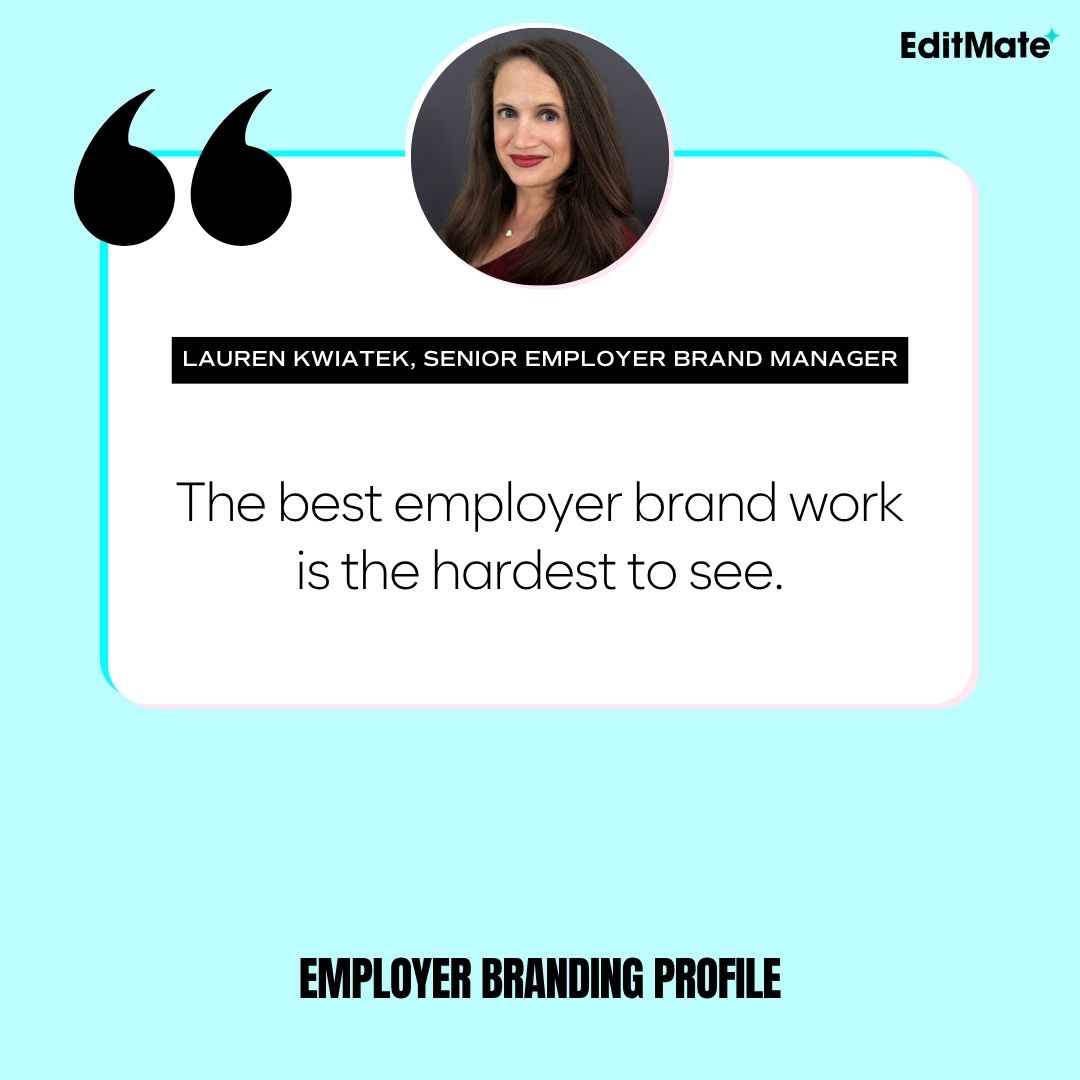
The best employer brand work is the hardest to see.
You can’t put the crisis of confidence that never happened into a slide, or the new hire who didn’t feel a jarring disconnect at six months.
So budget conversations reward campaigns, and the consistency underneath gets squeezed. I’ve lived this. I built the metrics and made the business case, and the function was still eliminated, because leadership looked at a healthy pipeline and didn’t realize it was healthy because of years of employer brand work.
Add in that most dedicated functions run on exactly one person, with no second seat and no succession plan, and you’ve got a discipline carrying enormous key person risk while constantly defending its own existence.
How do you measure success in Employer Branding?
By whether the promise holds up, not just whether people said yes.
The standard metrics matter: apply rate, funnel conversion, source quality, cost per hire, time to fill, regrettable turnover. Most of that data already lives in the ATS and HRIS. It just rarely gets connected back to the brand work that moved it.
But the measurement I care most about is the follow-up question nobody asks.
At my last role, we asked new hires what gave them the clearest view of the culture before accepting, then asked again at 45 days whether that research matched their lived experience. Nearly all of them said yes. That’s what I call paying down EB-debt in real time.
And I’d always rather look at retention than accepted offers. An accepted offer is a match. Retention is the relationship.
What role do you see employee-generated content playing in Employer Brand efforts?
It’s the version of the story people actually trust, because nobody paid for it.
Employer brand is what a company publishes. Talent brand is what gets repeated: the LinkedIn post someone wrote just because they wanted to, the Glassdoor review, the offhand comment to a friend who’s job hunting. That repeated side is the proof of whether everything published holds up.
It’s also becoming source material for the AI tools candidates now use to research employers, so it matters even more than it used to.
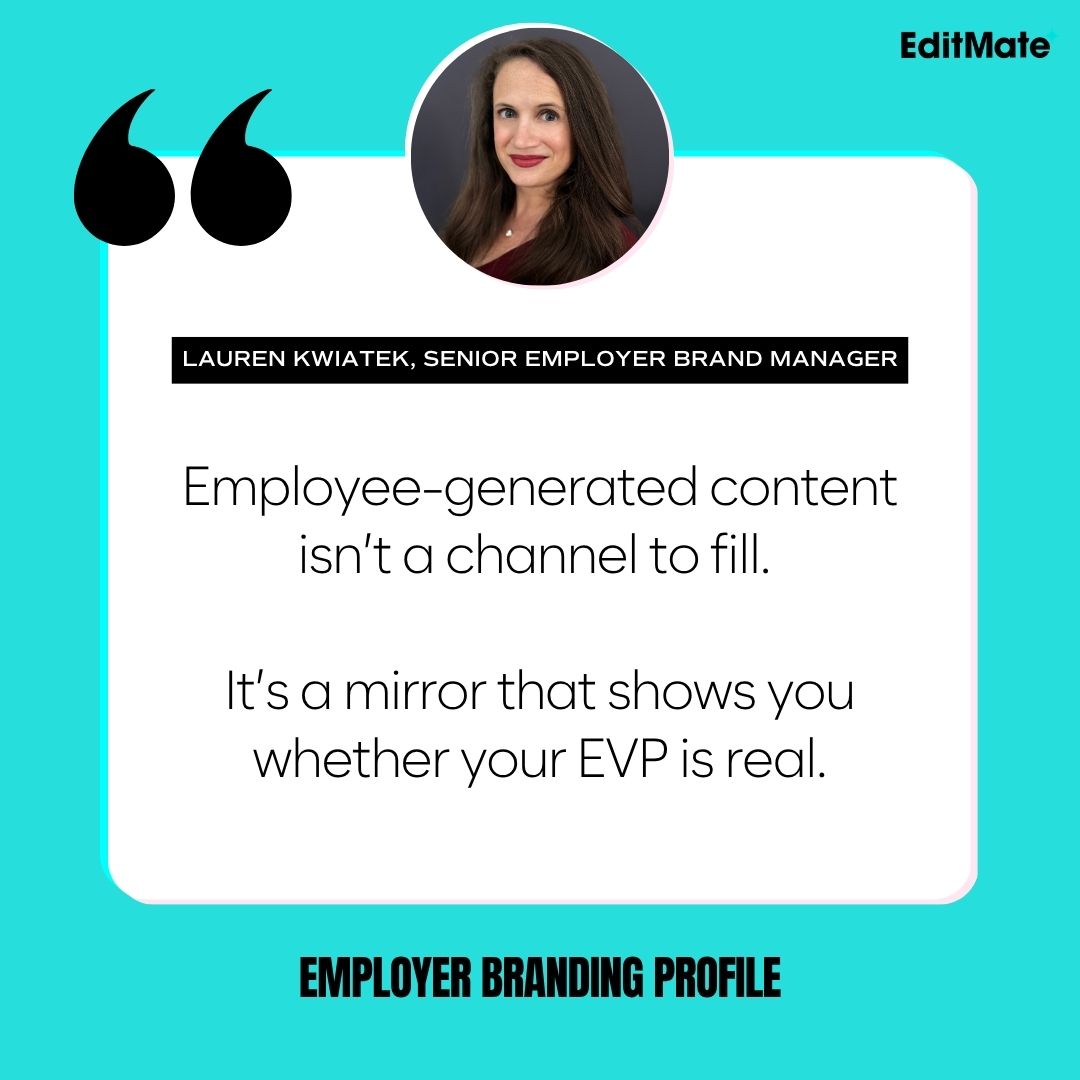
Employee-generated content isn’t a channel to fill. It’s a mirror that shows you whether your EVP is real.
How do you get employees involved in telling your company’s story, without it feeling forced?
Give them something worth talking about first.
Most advocacy programs start with “please share this post,” which asks people to perform enthusiasm instead of earning it.
People advocate for companies that advocated for them first. When my employer paid for my entire MBA, I told everyone, and posted about it, and nobody asked me to. Same with paid parental leave and a manager who actually supported me through it. When I spoke at an industry event with the company’s name under mine, people went looking at the careers page afterward, and I never even mentioned we were hiring.
A branded template can be copied by any competitor. An employee who praises you unprompted is a moat.
So invest in real benefits, real visibility, real internal mobility, and real managers. Then the content calendar can showcase what’s already true.
What have been your favorite campaigns, projects or initiatives you’ve worked on?
My favorite project was building the Employee Value Proposition at Farmers Insurance from the ground up.
The work spanned internal and external research, focus group facilitation, and stakeholder presentations across the business, but the heart of it was pressure-testing each pillar to make sure it reflected what employees actually lived day to day, not an aspirational version of the culture.
One of the most valuable insights came out of those focus groups. Employees liked the language, but they weren’t sure what it meant in practice. That feedback led me to create “People Who Make It Happen,” a monthly campaign spotlighting one employee per month who truly embodied our values and EVP pillars. It turned the messaging into something real, with faces and stories behind every word.
I also built the employer brand playbook based on the EVP, which I had the opportunity to create entirely from scratch. Taking the work from research, to real employee stories, to a playbook the whole organization could use is what made it such a rewarding project from start to finish.
What do you think employer branding teams should be doing more of right now? And less of?
More of: closing the loop with the people who said no, dropped out, or left, because they hold the most honest data about what your brand is actually communicating. Activating talent networks instead of letting them collect dust. Training managers on the promises being made externally, since your managers are your EVP. Getting in the room early during layoffs and crises. And making sure the story holds up across all three places it’s being told: to candidates, to employees, and in whatever an AI tool repeats.
Less of: generic EVPs that would still read fine with a competitor’s name swapped in. Measuring success at the accepted offer. Celebrating awards at exactly the wrong moment. Identical rejection emails for someone who never got a call and someone who made it to the final round. And running the content calendar on autopilot, because the calendar doesn’t know a layoff just happened, but the employer brand professional should.
If you had unlimited time and budget, what would be your Employer Brand “dream project”?
Building a real employer brand function from the ground up, in the right order, with a real team behind it.
The first time I built one, I did the visible layer first (social channels, creative identity, toolkits, playbook) and only later went back to build the foundation with research, focus groups, and an EVP pressure-tested against reality.
It worked: 257,000 organic followers across three channels, nearly 100% of new hires saying the culture matched what they expected, and more than $100,000 saved in agency fees.
But I’d love to do it with listening and building running side by side from day one, then extend it across the full lifecycle: a talent network that keeps candidates warm with segmented, culture-forward content; candidate communication tailored to each stage; manager enablement tied to the EVP; an ongoing EB-debt audit; a real alumni program; and localized storytelling for every market we hire in.
Basically, the whole system, fully connected, with nobody running it alone.
What advice would you give to someone who’s just entering the Employer Brand field?
Learn the whole system, not just your slice of it. Employer brand starts before the job post and doesn’t end when someone walks out the door, so get comfortable with TA, HR, employee experience, comms, and leadership, not just content.
Learn the language executives already speak. “Our culture isn’t where we want it” gets deprioritized; “we’re carrying an unmeasured liability that’s inflating cost per hire” gets a meeting.
Use AI to multiply your impact, but know that strategy, judgment, and relationships are the parts that can’t be handed off.
Stay embedded in the actual employee experience, because that’s what keeps the brand honest.
And document everything, because this field is still figuring out its shape, and you may be the one building the role you’ll eventually grow into.
Can you share some of your favorite resources you get EB ideas and inspiration from?
PeopleBrandCollective.org
What’s one thing you believe about the future of employer branding that you think more people should be talking about? How do you think it will continue to evolve in 2027?
I believe the future of employer branding will be everywhere.
Not a careers page or a campaign, but the candidate experience, the first 90 days, the exit interview, and the stories alumni tell years later. Employer brand touches every part of the employee lifecycle, and it’s been treated as a “nice to have” for far too long.
What more people should be talking about is that the story isn’t only being told by us anymore. Candidates are increasingly asking AI tools what it’s like to work somewhere, and those tools pull from everything they can find:
Glassdoor reviews, Reddit threads, LinkedIn posts, news coverage, and the careers page. An algorithm is synthesizing every touchpoint into one answer, whether or not the company ever intended to tell that version of the story. That means a careless rejection email, a misaligned manager, or a layoff handled poorly doesn’t stay contained. It becomes source material.
Employer brand teams need to be thinking about how their story shows up in those answers, and more importantly, whether the lived experience underneath it holds up.
In 2027, I think the organizations that win will be the ones that stop treating employer brand as a recruiting tactic and start treating it as a business function, the operating system a people strategy runs on.
I expect to see more alignment across TA, HR, employee experience, and communications, more measurement that goes beyond the accepted offer to whether the promise held up months later, and more investment in building teams rather than leaving the entire function on one person’s shoulders.
And as AI makes it easier to personalize at scale, generic will start to feel criminal. When every employer has the same tools, the differentiator won’t be the technology. It’ll be whether there’s a real, specific, credible story underneath it. You can’t automate your way to a culture worth staying for.
A huge thank you to Lauren for sharing her insights and giving us plenty to think about!
She’s given us a great reminder here for anyone working in the space: you can have the best EVP, the best campaigns, and all the right content, but it all needs to align with the genuine employee experience.
We’ll be continuing this series with more EB leaders, so stay tuned for more profiles, insights, and ideas to inspire your own employer brand work!